Tuesday, October 30, 2012
Tennant's Extra
As Stumar Press have released Spare Parts as an ebook here's Peter Tennant's review of the original paperback edition from Rainfall Books. He says some very nice things, including this comment: "Young’s writing is never less than rewarding, while at his best he is thought provoking and capable of genuinely moving the reader."

Friday, October 26, 2012
Men in Tights 3: Curse of the Miniskirt
The latest instalment of Sparking Neurones covers psychedelics, ancient curses and nanotech shamanism in The Avengers. But the real draw is the crappy miniskirt costume Hawkeye wore for a few issues back in the '70s.
Monday, October 15, 2012
Avengers Assemble
"Too much talking." "Dull action scenes." "Too many characters." Just some of the complaints I've heard levelled against Avengers Assemble. Seeing as how I loved the film I thought some sort of response was called for. Because there aren't enough comments about the film on the internet already.
Avengers Assemble had a lot going on, and a lot of characters, but that was the whole point of the film: getting to see all those heroes together in the same story. Yes, the film has flaws: it takes time to get all the characters in place; some of the characters don't get much to do; Thor's backstory is hand-waved away, with only one or two lines of dialogue to explain how it is even possible for him to be back on Earth. But these problems were inherent of the nature of the project. No one's ever attempted something like this before; taking four existing film franchises and joining their characters and storylines all together in one film while simultaneously blending all the separate genres from those franchises and adding in some more -- science fiction, fantasy, war movie, spy thriller. The logistics of this film were a nightmare; it could -- it should -- have all gone horribly wrong. The fact that it didn't is a testament to the skill of all the people who worked on the film.
Maybe not everything worked in the film, but even the bits that seemed underwhelming were there for a purpose, elegant solutions to impossible problems of too many characters and not enough screen-time. Hawkeye doesn't have enough time to develop as a character? Tie his character arc in with Black Widow's so that everything she goes through reflects back to Hawkeye, fleshing out his character even when he isn't on-screen. Not enough time for Loki to outline his dastardly plan and give Black Widow a character-defining moment? Make her response to his plan her character-defining moment. No one likes Tony Stark and Pepper Potts any more after Iron Man 2? Use a five minute scene to make them sexy and likeable again, while simultaneously setting up the major themes of the story. The entire screenplay is full of smart solutions to similar problems. Obviously some of them work better than others but Joss Whedon does a better job of making the film coherent and exciting than anyone had a right to expect.
Just imagine if someone else had tackled the project. James Cameron -- the film would have gone on for 3 1/2 hours and Black Widow would have been a wimp for the first half of the film before one of the male characters taught her how to be independent. George Lucas -- the dialogue would embarrass the writers of porn films, there would be "comical" sidekicks, the plot would have holes big enough to fly a Death star through. Steven Spielberg -- one of the heroes would have father/son issues, cute kids would be shoehorned into the script and for every cool scene there would be another one filled with toe-curling sentimentality. Or how about Michael Bay? Or Stephen Sommers?
We were never going to get a perfect Avengers film. Maybe we should settle for what we got: a very good one.
Friday, October 12, 2012
Fear and Wonder: The Spare Parts interview
As Spare Parts has been reissued as an ebook by Stumar Press I've dug up this interview from when the original Rainfall paperback was published. The interview is conducted by British Fantasy Award winning editor Pam Creais.
Pam Creais: Which writers did you enjoy most as a youngster?
Stuart Young: My favourites were Sherlock Holmes by Sir Arthur
Conan Doyle. Biggles by Captain W.E. Johns. Dr Who novelizations (especially
the Terrance Dicks ones; he also wrote several SF, horror, and detective novels
that I loved). The Willard Price Adventure series. The Wind in the
Willows by Kenneth Grahame. C.S. Lewis’s Narnia books. 101 Dalmatians
by Dodie Smith. John Harris’s Martin Falconer series. And The Hitch-Hikers
Guide to the Galaxy by Douglas Adams.
And
then there were the comics like Watchmen, Dark Knight Returns, X-Men,
and Justice League International.
PC: When did you first start writing yourself?
SY: I can’t remember exactly. There were writing
assignments in school that never felt like assignments because they were just
fun to do. I remember doing an illustrated Mr Men story when I was about
six. And a few years later one of my friends was a huge Dr Who fan, he
had all the novelizations and he got me into reading them. He used to try
writing his own ones and I followed suit. So I’ve always wanted to be a writer.
But in terms of actually submitting stuff that would’ve been, I don’t know,
1995, or something like that.
PC: How did you become aware of the small press and what
was your first accepted story?
SY: I read somewhere that the small press was the place to try out your work before moving onto the big leagues. Of course then I had the problem that most small press magazines were horror and I knew pretty much zero about the genre so I had to slog my way through a bunch of novels and short stories that I absolutely hated before I found anything which fired that little spark of recognition -- “Hey, this is the kind if stuff I want to do!” Then I went through a period where I just collected rejection slips for about nine months. I was thinking, “Women have given birth quicker than this!” Eventually I wrote ‘Daddy’s Little Girl’ in a single afternoon and sold it to Nasty Piece of Work on my first submission.
PC: Do you think the small press is beneficial to
aspiring writers?
SY: It can be. If it works well you get Honourable
Mentions and agents see your work and approach you about writing novels and you
use it as a springboard to professional work. But if it doesn’t work well then
no one actually reads your stories. At all. In that case it becomes a vicious
circle; the publisher needs the readers so they can afford marketing to make
the magazine more visible to the readers, but the readers don’t buy the
magazine because they’ve never heard of it, so the publisher sells less copies
and has less money to spend on promoting it.
Of
course the small press can be a valuable way to hone your talents as a writer
before tackling the bigger publishers. Although even then there are problems.
Some authors write very specific types of fiction which only appeal to the real
aficionados of that particular genre. So all the die-hard fans of, I don’t
know, supernatural mysteries solved by Bavarian cheese-makers, buy the writer’s
stuff and tell them they’re a genius but when they step outside that circle into
the wider realms of publishing no one wants to read their work.
But
obviously not everyone can expect to get Stephen King type sales. So even if
you don’t hit the big time the progression through the different levels of the
small press (magazines, paperbacks, hardbacks) means that you’re reaching the
widest audience that’s possible for you.
Wow, that almost
sounds like I know what I’m talking about, doesn’t it?
PC: How did your first collection of stories, Spare
Parts, come about?
SY: I had a whole bunch of old horror short stories lying
around. Plus I had a couple of new ones that were too long for most magazines’
guidelines. So I put them together and showed them to John B. Ford at Rainfall
Books. John said he couldn’t use all the stories because there were just too
many of them so he picked out the ones he liked the best.
I was a
little disappointed because a lot of good stories didn’t make the final cut.
But the collection probably has more of a sense of identity this way as all the
stories John chose are about love and death. Which means I just took all my
characters and put them through the wringer. Make them fearful, make them break
down before the dark wonders of the universe. That’s a pretty good goal to aim
for in horror fiction; fear and wonder.
PC: Which writers in the small press scene do you most
admire?
SY: To be honest I’ve got behind on my reading in
the small press. Names that spring to mind are Mark Samuels and Matt Cardin who
both write very atmospheric philosophical horror. And I really admire the way
Tim Lebbon has used his success in the small press as a springboard to working
with bigger publishers. Gary Spencer Millidge writes a great comic called Strangehaven
which is this very English, very eccentric story about an idyllic village
that’s populated by Freemasons, South American shamans, and extraterrestrials.
It’s kind of a gentler version of The League of Gentlemen, but Millidge
did it first. And Paul Grist did a great crime comic called Kane but I’m
not sure if he’s still doing it because he’s doing Jack Staff for Image
these days.
PC: Is it equally gratifying to get a story published in
an e-zine as it is a hard copy publication?
SY: It depends. There’s pros and cons to both approaches.
When I had a story in The Mammoth Book of Future Cops I was jumping up
and down because it’s a mass market paperback, people can get hold of it
anywhere. But then my local bookshops didn’t stock it. On the other hand the
local libraries had multiple copies. Whereas if something goes online it’s
there for anyone to read.
I’ve
got an eBook of fantasy stories, called Shards of Dreams, coming out
soon so I’m curious to see what sort of business that does. In theory it’ll be
easy for people to get hold of because they can just click on the web site. But
they won’t actually have the book in their hand to let them flick through it
and decide if it’s the kind of thing they might want to buy. Hopefully they will
buy it because it’s got quite a good cross-section of my stories. There’s funny
stuff, scary stuff, adventure stuff. And my definition of fantasy is pretty
broad so it’s more like rocketships and flying cities and sentient universes
than goblins and elves. Which is not to say goblins and elves can’t be fun but
I know they’re the reason some people run away screaming when presented with
fantasy books.
PC: Have you considered writing a novel, and, if so, what
genre would you choose to write in?
SY: The longest prose piece I’ve completed to date is a
novella of religious/philosophical horror. Still waiting to see if anyone
publishes that.
I’ve
got some ideas for novels. Most of them would probably be described as horror.
Although one would definitely be SF and another would be fantasy or maybe
science fantasy.
It’s
just a question of which ones actually get written.
PC: Do you think that generally the market for
horror/fantasy fiction is on the wane in Great
Britain?
SY: Apart from stocking a few British authors like Simon
Clark most UK bookshops’ idea of horror is to sell US horror authors. And even
then you either need to have a franchise like Buffy or Anita Blake or else be
Stephen King who is a franchise in himself.
I’ve
lost track of modern adult fantasy authors but kids’ fantasy seems to be going
great guns. Their books look much more fun and tend to be written as series
rather serials. So even if you don’t complete the series at least you know the
book you’re reading at the time will have a complete story.
PC: Is it difficult to come up with new ideas in the area
of fantastic fiction: surely everything has been said and done nowadays?
SY: Good point. But that’s true of pretty much every area
of life. We all still have the same basic goals as our ancestors: survive as
long as you can in as much comfort as you can. But whereas for them that meant
sitting in a cave, thinking about the best way to get food for your family
whilst daubing a picture of a deer on the wall, for us it means sitting in a
house, worrying about the mortgage whilst the TV tells us what products to buy.
Meanwhile wars are still raging, politics is still as dishonest as ever. Even
modern physics like superstring theory can draw parallels with ancient
religious beliefs like Kabbalah. Sometimes it seems that the aim in any
endeavour is not so much to create something new as to refine what has gone
before.
But
that’s just off the top of my head. I’m sure there are holes in that argument
that you could drive a truck through.
So
if I can drag myself back to answering your original question: I’m not a real
scholar of fantastic fiction or weird fiction or whatever you want to call it.
Some stuff sticks in my head and some stuff doesn’t. I just write stories and
hope I’m not ripping anyone off too badly.
PC: Does your interest in the comic/graphic novel medium
influence your story writing?
SY: Definitely. I soaked up a lot of stuff about drama
and conflict from Stan Lee and Chris Claremont. Characters like Spider-Man and
the X-Men always struggled to do the right thing even though that would usually
end up making things worse for them.
And
in terms of story structure I found comics very helpful. Comics only have so
many pages per issue, and so many panels per page, and you can only fit so many
words in per panel. So everything -- plot, dialogue, description -- needs to be
as tightly written as possible. Although sloppy writing obviously isn’t
encouraged in prose the mechanics of writing aren’t always stressed to the same
degree, people often get caught up in the idea of metaphors and similies and
they forget about stuff like scene structure and tight plotting. To a certain
extent if you’re worrying about the economy of words and story structure in
prose then it’s a question of aesthetics, whereas in comics it’s a question of
necessity.
Even
in a comic like Seppuku, the miniseries I’ve written for Engine Comics,
where I had fifty-two pages to play with, I had to keep shaving the lines down
so that they’d fit. Every panel felt like, “Okay, I’ve got to explain this
character’s motivation whilst simultaneously moving the plot forward and
outlining a fundamental Zen concept. And I’ve got to do it in less than ten
words.”
PC: If someone gave you unlimited cash to make the genre
film of your dreams, what novel or story would you like to see make the
transition from the page to the big screen, and why?
SY: Oh God, there’s so many books and comics I’d like to
see made into films. Um, I’ll say Sandman by Neil Gaiman. Even though
Hollywood would totally screw it up.
Thursday, October 11, 2012
Men in Tights 2: The Revenge
To celebrate the latest instalment of Sparking Neurones delving into the psychological and spiritual aspects of Spider-Man I've rewritten the lyrics to the Spider-Man theme:
Spider-Man, Spider-Man. Does whatever a spider can.
Climbing walls, fighting crime. Like spiders do all the time.
Look out, here comes the Spider-Man.
All his powers, could be mystic. The idea makes fanboys go ballistic.
Can he rise from the dead? Didn't he used to be wed?
Hey, there! There goes the Spider-Man.
Why is his life so tragic? Maybe the spider's his totem?
Could it be to do with magic? And has he got a super-powered scrotum?
Spider-Man, Spider-Man. Friendly neighbourhood, Spider-Man.
His webbed mask lends him power. Stops him being a wallflower.
Look out, here comes the Spider-Man.
Spider-Man, Spider-Man. Friendly neighbourhood, Spider-Man.
His webbed mask lends him power. Stops him being a wallflower.
Read about him in this column. I wonder why he moves like Gollum?
You'll love the Spider-Man!
The Teeming Brain head honcho Matt Cardin suggested a Lovecraftian version of the song which led me to mangle the lyrics even more:
Spider-Man, Spider-Man. Does whatever a spider can.
If he drops his underwear. You'll get a pretty big scare.
Look out, here comes the Spider-Man.
Is it a penis or a tentacle? They look almost identical.
His willy's from another dimension. And also an SF convention.
Hey, there! There goes the Spider-Man.
I think you will find, his naughty bits look like Azathoth.
How did this idiot god go blind? It wasn't through reading Isaac Asimov.
Spider-Man, Spider-Man. Friendly neighbourhood, Spider-Man.
His haunter of the darkness, is wrinklier than Agatha Harkness.
Look out, here comes the Spider-Man.
Spider-Man, Spider-Man. Friendly neighbourhood, Spider-Man.
His haunter of the darkness, is wrinklier than Agatha Harkness.
It also looks kinda like Cthulhu. His fave from Star Trek is Mr Sulu.
Nerdy old Spiderman!
Spider-Man, Spider-Man. Does whatever a spider can.
Climbing walls, fighting crime. Like spiders do all the time.
Look out, here comes the Spider-Man.
All his powers, could be mystic. The idea makes fanboys go ballistic.
Can he rise from the dead? Didn't he used to be wed?
Hey, there! There goes the Spider-Man.
Why is his life so tragic? Maybe the spider's his totem?
Could it be to do with magic? And has he got a super-powered scrotum?
Spider-Man, Spider-Man. Friendly neighbourhood, Spider-Man.
His webbed mask lends him power. Stops him being a wallflower.
Look out, here comes the Spider-Man.
Spider-Man, Spider-Man. Friendly neighbourhood, Spider-Man.
His webbed mask lends him power. Stops him being a wallflower.
Read about him in this column. I wonder why he moves like Gollum?
You'll love the Spider-Man!
The Teeming Brain head honcho Matt Cardin suggested a Lovecraftian version of the song which led me to mangle the lyrics even more:
Spider-Man, Spider-Man. Does whatever a spider can.
If he drops his underwear. You'll get a pretty big scare.
Look out, here comes the Spider-Man.
Is it a penis or a tentacle? They look almost identical.
His willy's from another dimension. And also an SF convention.
Hey, there! There goes the Spider-Man.
I think you will find, his naughty bits look like Azathoth.
How did this idiot god go blind? It wasn't through reading Isaac Asimov.
Spider-Man, Spider-Man. Friendly neighbourhood, Spider-Man.
His haunter of the darkness, is wrinklier than Agatha Harkness.
Look out, here comes the Spider-Man.
Spider-Man, Spider-Man. Friendly neighbourhood, Spider-Man.
His haunter of the darkness, is wrinklier than Agatha Harkness.
It also looks kinda like Cthulhu. His fave from Star Trek is Mr Sulu.
Nerdy old Spiderman!
Tuesday, October 09, 2012
Men in Tights
Second instalment of Sparking Neurones is up and running. It's the first part of a short series of articles addressing spirituality, the daemon muse, cannibalistic rituals, psychedelics, psychology and artificial intelligence. Of course being me I tie it all together through a discussion of superhero costumes.
Wednesday, October 03, 2012
The ebook has landed
My 2003 collection Spare Parts has been reissued as an ebook by Stumar Press. Introduction by Tim Lebbon. Illustrations by David Bezzina and Bob Covington. Incompetent hackwork by me.
Friday, September 07, 2012
Darker Minds now available
Darker Minds anthology is out now. Featuring stories by 15 different authors including Gary McMahon, Stephen Bacon, Ray Cluley, Simon Bestwick and yours truly.
Tuesday, August 14, 2012
Alt-Zombie reviews
Alt-Zombie has been getting some good reviews. It's "highly recommended" and "an absolute win" and "a book that definitely needs to be on your horror bookshelf".
My contribution to the anthology has been doing okay too. Dark Musings describes it as one of the highlights, Shattered Ravings marks it as "one of my favourite stories in the book" Ginger Nuts of Horror says it's "fresh and full of bite" and The Zombie Librarian calls it "the best of the lot."
And just for good measure here's another review of the anthology, by Trevor Denyer. "This was a well written, professionally presented anthology, but I'm not convinced that the zombie stories were that alternative. At the end of the day, they were all shuffling, rotting, re-animated corpses. I found that this aspect of the book became repetitive and tiresome. Having said that, there were some outstanding contributions, namely: 'Thus Spoke Lazarus' by Gary McMahon (an interesting take on the Lazarus fable), 'White Light, Black Fire' by Stuart Young (horror with a tongue-in-cheek humour that I love about this guy's writing) and 'Acceptable Genocide' by Shaun Hamilton (in my view, the best story in the collection. Chilling and deeply moving). All in all, a very acceptable collection of good stories, best read sparingly and not altogether."
My contribution to the anthology has been doing okay too. Dark Musings describes it as one of the highlights, Shattered Ravings marks it as "one of my favourite stories in the book" Ginger Nuts of Horror says it's "fresh and full of bite" and The Zombie Librarian calls it "the best of the lot."
And just for good measure here's another review of the anthology, by Trevor Denyer. "This was a well written, professionally presented anthology, but I'm not convinced that the zombie stories were that alternative. At the end of the day, they were all shuffling, rotting, re-animated corpses. I found that this aspect of the book became repetitive and tiresome. Having said that, there were some outstanding contributions, namely: 'Thus Spoke Lazarus' by Gary McMahon (an interesting take on the Lazarus fable), 'White Light, Black Fire' by Stuart Young (horror with a tongue-in-cheek humour that I love about this guy's writing) and 'Acceptable Genocide' by Shaun Hamilton (in my view, the best story in the collection. Chilling and deeply moving). All in all, a very acceptable collection of good stories, best read sparingly and not altogether."
Wednesday, August 01, 2012
Ginger Nuts of Horror interview
Jim Mcleod has interviewed me at the Ginger Nuts of Horror.
Topics covered include Star Wars comics, Jackie Chan films, the reissue of Spare Parts as an eBook and what not to say to someone in the gents toilets.
Monday, July 16, 2012
Sparking Neurones has arrived
The first instalment of Sparking Neurones, my column over at Matt Cardin's revamped site The Teeming Brain, is now online.
Saturday, June 09, 2012
THHHB review
Rather spiffing review of The Mask Behind the Face at The Horrifically Horrifying Horror Blog courtesy of Gary Swindley.


Wednesday, May 30, 2012
Thursday, April 26, 2012
Posting about a poster
Just been informed that the first person to buy a copy of the British Fantasy Award-winning The Mask Behind the Face wins a free poster of the cover signed by me, cover artist Ben Baldwin and Pendragon Press head honcho Chris Teague.


Saturday, March 24, 2012
Spare Parts

My debut collection, Spare Parts, is being reissued by Stumar Press as an ebook. Six tales of love and death coming in 2012.
http://stumarpress.webs.com/spareparts.htm
Wednesday, March 07, 2012
Darker Minds
Just heard that my story, Houses in Motion, will be included in the Darker Minds anthology from Dark Minds Press.
Tuesday, February 28, 2012
More Monster Book for Girls News
The Monster Book for Girls is now available for use in one of those newfangled Kindle contraptions.
Monday, January 16, 2012
The Monster Book for Girls
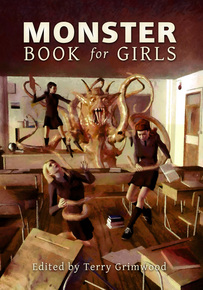
The Monster Book of Girls includes my story Breaking the Spell. Which, in a shocking move for this particular anthology, features monsters. And girls.
Tuesday, January 10, 2012
Sherlock -- The Hounds of Baskerville
The Hound of the Baskervilles is probably the most filmed Sherlock Holmes story ever which means the plot is pretty well known so I assume that's why Mark Gatiss decided to ditch most of the plot in his adaptation for Sherlock.
Instead of a family curse and an escaped convict we got conspiracy theories and a hidden army base developing secret weapons. Not nearly as satisfying in my opinion. Especially as it robs us of the chance to see what Gatiss would have done with the scene when Holmes and Watson meet Henry Baskerville at a London hotel. Every screen version of Hound that I remember seeing always feels that the pace is starting to slacken at this point and so decides to jazz things up a bit. For example, in the Hammer version Sir Henry is attacked by a tarantula and in the Ian Richardson version Sir Henry is shot at by someone wielding a rifle disguised as a walking stick. Although this definitely makes things more exciting both these adaptations have forgotten that the whole point of the story is that Sir Henry is in fear for his life from a gigantic hound. The story isn't called The Tarantula of the Baskervilles or The Rifle Disguised as a Walking Stick of the Baskervilles.
But if Gatiss changed the plot then at least he kept the characters. Or their names at any rate. Dr Mortimer is now a therapist, Barrymore is an army major, Stapleton a government scientist -- I won't mention who Selden became because it's a bit of a plot twist. So the characters were all completely different in both role and personality despite keeping their original names. Except for Sir Henry Baskerville who became Henry Knight (perhaps the new surname was to make up for no longer having a knighthood.) The other change in name was for the Grimpen Mire which became the Grimpen Minefield which led to a scene which I'm guessing surprised absolutely nobody.
Actually, the Grimpen Mire/Minefield scene highlighted the fact that although Gatiss largely ignored the novel's plot he did occasionally retain certain ideas from the original story. So there was still a mysterious signal being flashed across the moors at night. And Holmes got to deliver his little speech about Watson not being luminous but rather he acts as a conductor of light, stimulating Holmes's genius. There's also a quick reminder (and subversion) of the fact that Holmes actually disappeared off-page for most of the original novel.
There were also various nods to other tales from the Holmes canon. Gatiss's explanation for the "gigantic hound" was inspired by 'The Devil's Foot.' And the idea of Holmes using a fictitious bet in order to get information out of an unwilling witness comes from 'The Blue Carbuncle.' (Gatiss even nicks the bit from the Jeremy Brett adaptation of this story where Holmes is forced to make good on his 'bet' with Watson.) There's a reference to the required "seven per cent" for Holmes's stimulants, although here they were not cocaine. Gatiss also used the famous quote about how eliminating the impossible means that whatever remains, no mater how improbable, must be the truth, although I can't remember which story this comes from offhand. And there's probably loads more references that I'm missing; my knowledge of Holmes trivia isn't as sharp as it used to be.
Anyway, I didn't find The Hounds of Baskerville as entertaining as last week's A Scandal in Belgravia. It wasn't necessarily bad but it wasn't particularly compelling either. The story was X-Files lite; the comedy bits too broad; firearms were as easy to acquire as peppermints; despite being a brilliant detective Sherlock somehow completely failed to find the cigarettes that Watson had hidden in the flat; the "mind palace" bit was just an excuse to use effects that were old hat about five minutes after the credits for Minority Report finished; the constant references to dogs scattered throughout the story (right down to casting Russell Tovey, best known for playing a werewolf in Being Human) became heavy-handed. And the idea of Holmes being shaken by the possibility of the demolition of his perfectly rational world-view after not being able to explain away his sighting of the hound would have been a lot more convincing if it wasn't totally obvious what had really happened. Even I figured it out and I'm an idiot.
But of course the worst thing about The Hounds of Baskerville was the final scene which promised the return of Moriarty next week. Hopefully that wasn't a prison he was released from but a drama school where he received some much needed acting lessons.
Another thing, which applies to Sherlock as a whole but which I keep forgetting to mention: I'm fed up with everyone mistakenly thinking Holmes and Watson are a gay couple and the way Watson chases anything in a skirt. I know this is an attempt to stop speculation among the viewers that the characters might be gay but it stopped being funny about halfway through episode one of the first series. Moffatt and Gatiss made their point about Holmes and Watson being straight ages ago; they really need to start exploring other aspects of the characters' personalities. And as far as I can recall the whole idea of Watson being a ladies man in the canonical stories comes from a single line in one of the later stories where Holmes says Watson is still married even though it had previously been stated that his wife passed away in an earlier story. For a start this could well be a continuity error of the kind Conan Doyle occasionally made -- exactly where is Watson's old army injury, Sir Arthur? -- and even if it isn't, all it shows is that Watson remarried after becoming a widower. That hardly makes him Russell Brand.
Instead of a family curse and an escaped convict we got conspiracy theories and a hidden army base developing secret weapons. Not nearly as satisfying in my opinion. Especially as it robs us of the chance to see what Gatiss would have done with the scene when Holmes and Watson meet Henry Baskerville at a London hotel. Every screen version of Hound that I remember seeing always feels that the pace is starting to slacken at this point and so decides to jazz things up a bit. For example, in the Hammer version Sir Henry is attacked by a tarantula and in the Ian Richardson version Sir Henry is shot at by someone wielding a rifle disguised as a walking stick. Although this definitely makes things more exciting both these adaptations have forgotten that the whole point of the story is that Sir Henry is in fear for his life from a gigantic hound. The story isn't called The Tarantula of the Baskervilles or The Rifle Disguised as a Walking Stick of the Baskervilles.
But if Gatiss changed the plot then at least he kept the characters. Or their names at any rate. Dr Mortimer is now a therapist, Barrymore is an army major, Stapleton a government scientist -- I won't mention who Selden became because it's a bit of a plot twist. So the characters were all completely different in both role and personality despite keeping their original names. Except for Sir Henry Baskerville who became Henry Knight (perhaps the new surname was to make up for no longer having a knighthood.) The other change in name was for the Grimpen Mire which became the Grimpen Minefield which led to a scene which I'm guessing surprised absolutely nobody.
Actually, the Grimpen Mire/Minefield scene highlighted the fact that although Gatiss largely ignored the novel's plot he did occasionally retain certain ideas from the original story. So there was still a mysterious signal being flashed across the moors at night. And Holmes got to deliver his little speech about Watson not being luminous but rather he acts as a conductor of light, stimulating Holmes's genius. There's also a quick reminder (and subversion) of the fact that Holmes actually disappeared off-page for most of the original novel.
There were also various nods to other tales from the Holmes canon. Gatiss's explanation for the "gigantic hound" was inspired by 'The Devil's Foot.' And the idea of Holmes using a fictitious bet in order to get information out of an unwilling witness comes from 'The Blue Carbuncle.' (Gatiss even nicks the bit from the Jeremy Brett adaptation of this story where Holmes is forced to make good on his 'bet' with Watson.) There's a reference to the required "seven per cent" for Holmes's stimulants, although here they were not cocaine. Gatiss also used the famous quote about how eliminating the impossible means that whatever remains, no mater how improbable, must be the truth, although I can't remember which story this comes from offhand. And there's probably loads more references that I'm missing; my knowledge of Holmes trivia isn't as sharp as it used to be.
Anyway, I didn't find The Hounds of Baskerville as entertaining as last week's A Scandal in Belgravia. It wasn't necessarily bad but it wasn't particularly compelling either. The story was X-Files lite; the comedy bits too broad; firearms were as easy to acquire as peppermints; despite being a brilliant detective Sherlock somehow completely failed to find the cigarettes that Watson had hidden in the flat; the "mind palace" bit was just an excuse to use effects that were old hat about five minutes after the credits for Minority Report finished; the constant references to dogs scattered throughout the story (right down to casting Russell Tovey, best known for playing a werewolf in Being Human) became heavy-handed. And the idea of Holmes being shaken by the possibility of the demolition of his perfectly rational world-view after not being able to explain away his sighting of the hound would have been a lot more convincing if it wasn't totally obvious what had really happened. Even I figured it out and I'm an idiot.
But of course the worst thing about The Hounds of Baskerville was the final scene which promised the return of Moriarty next week. Hopefully that wasn't a prison he was released from but a drama school where he received some much needed acting lessons.
Another thing, which applies to Sherlock as a whole but which I keep forgetting to mention: I'm fed up with everyone mistakenly thinking Holmes and Watson are a gay couple and the way Watson chases anything in a skirt. I know this is an attempt to stop speculation among the viewers that the characters might be gay but it stopped being funny about halfway through episode one of the first series. Moffatt and Gatiss made their point about Holmes and Watson being straight ages ago; they really need to start exploring other aspects of the characters' personalities. And as far as I can recall the whole idea of Watson being a ladies man in the canonical stories comes from a single line in one of the later stories where Holmes says Watson is still married even though it had previously been stated that his wife passed away in an earlier story. For a start this could well be a continuity error of the kind Conan Doyle occasionally made -- exactly where is Watson's old army injury, Sir Arthur? -- and even if it isn't, all it shows is that Watson remarried after becoming a widower. That hardly makes him Russell Brand.
Wednesday, January 04, 2012
Sherlock - A Scandal in Belgravia
The new episode of Sherlock -- 'A Scandal in Belgravia' -- was quite good fun. Yes, Sherlock will no doubt get up the noses of purists but when it comes to Holmes I'm a strange mixture of connoisseur and philistine. On the one hand I love the original Conan Doyle stories, think the Jeremy Brett TV series is the gold standard by which all other screen versions should be judged and will quite cheerfully unleash a swamp adder upon any writer foolish enough to have Holmes tangle with Dracula, Mr Hyde or any other supernatural foe. On the other hand I have a soft spot for Without a Clue and Young Sherlock Holmes and the Pyramid of Fear so obviously my judgement should be taken with a grain of salt. Sherlock tends to come down on both sides of the divide for me, depending on how well each individual episode is handled and whether I happen to feel connoisseurish or philistiney when I watch it. Consequently I shall be sticking the boot into Sherlock even as I praise it.
The opening scene, resolving the cliffhanger from series one, has divided viewers. Some found it hilariously inventive, others stupidly anti-climactic. Personally, I'm just glad they got rid of the rubbish actor playing Moriarty so quickly. Presumably he had to rush off to play the villain in the local panto. I actually found myself hoping that he was a flunky pretending to be Moriarty in order to leave the criminal mastermind out of harm's way in case his plan backfired. Unfortunately it looks like we're stuck with an actor who is less scary than the Jim Moriarty off The Goon Show. (To be fair I've not seen the actor in anything else so he may have given brilliant performances in every other role he's played. There's even a chance that his Moriarty will improve as he gets used to the part. Fingers crossed.)
Anyway, on to the main story. I'm not entirely convinced that turning Irene Adler into a morally ambiguous femme fatale was a good idea -- if memory serves she was a lot more sympathetic in the original short story -- but as this allowed Lara Pulver to strut around naked I'm not complaining. Although it did bug me that Sherlock found it impossible to make any deductions about Adler just because she was naked. Surely he could still have made deductions about her hairstyle, make up and the building she was living in. Not to mention the most obvious clue of all -- "Only one beauty salon in the whole of Europe uses that distinctive style of Brazilian!" After all, canonical stories such as 'The Blue Carbuncle' show that Holmes is able to make deductions based upon fashion and grooming. Perhaps one of the cases for which Watson feels the world is not ready is 'The Adventure of the Primped Pussy.'
Still, I was chuffed that Moffatt managed to keep so much of the original 'A Scandal in Bohemia' plot in his adaptation although he did jettison at least one key scene in order to explore the possibility of romance between Holmes and Adler -- an idea which I thought I would hate but which Moffatt managed to handle without compromising Holmes' analytical personality. (I'm not really up on Holmes pastiches but I guess that most writers ignore this scene from 'Bohemia' when they have Adler turn up in their stories as it reminds people that not only did Adler not fancy Holmes but she actually married someone else which rather gets in the way of developing romantic storylines for the two of them.)
Meanwhile, the Holmes geek in me enjoyed the references to other Holmes stories: 'The Greek Interpreter', 'The Speckled Band' and 'The Illustrious Client' (and possibly a whole bunch of others that I missed). Unfortunately the plot got a little bit carried away with its twists and turns and the ending was pretty ludicrous. Also, although Adler got a lot more to do than in the original story she actually came across as less capable -- in 'Bohemia' she scored a decisive victory against Holmes whilst acting completely by herself but in 'Belgravia' she had outside assistance yet still had trouble landing an intellectual KO. And it seemed a bit of a shame for her to end up as a damsel in distress in need of rescue.
Another thing -- and there's a good chance that I've misunderstood all the twists and turns of the plot here -- but Adler seemed willing to sacrifice national security in order to save her own skin. This basically means that she doesn't care if innocent people die so long as she survives. As I say, I may be wrong, she may have been unaware of what she was getting into and was an innocent dupe but such a lack of intelligence just makes her seem less worthy of the title the woman.
Still, overall the episode was enjoyable, appealing more to my inner philistine than my connoisseur.
The opening scene, resolving the cliffhanger from series one, has divided viewers. Some found it hilariously inventive, others stupidly anti-climactic. Personally, I'm just glad they got rid of the rubbish actor playing Moriarty so quickly. Presumably he had to rush off to play the villain in the local panto. I actually found myself hoping that he was a flunky pretending to be Moriarty in order to leave the criminal mastermind out of harm's way in case his plan backfired. Unfortunately it looks like we're stuck with an actor who is less scary than the Jim Moriarty off The Goon Show. (To be fair I've not seen the actor in anything else so he may have given brilliant performances in every other role he's played. There's even a chance that his Moriarty will improve as he gets used to the part. Fingers crossed.)
Anyway, on to the main story. I'm not entirely convinced that turning Irene Adler into a morally ambiguous femme fatale was a good idea -- if memory serves she was a lot more sympathetic in the original short story -- but as this allowed Lara Pulver to strut around naked I'm not complaining. Although it did bug me that Sherlock found it impossible to make any deductions about Adler just because she was naked. Surely he could still have made deductions about her hairstyle, make up and the building she was living in. Not to mention the most obvious clue of all -- "Only one beauty salon in the whole of Europe uses that distinctive style of Brazilian!" After all, canonical stories such as 'The Blue Carbuncle' show that Holmes is able to make deductions based upon fashion and grooming. Perhaps one of the cases for which Watson feels the world is not ready is 'The Adventure of the Primped Pussy.'
Still, I was chuffed that Moffatt managed to keep so much of the original 'A Scandal in Bohemia' plot in his adaptation although he did jettison at least one key scene in order to explore the possibility of romance between Holmes and Adler -- an idea which I thought I would hate but which Moffatt managed to handle without compromising Holmes' analytical personality. (I'm not really up on Holmes pastiches but I guess that most writers ignore this scene from 'Bohemia' when they have Adler turn up in their stories as it reminds people that not only did Adler not fancy Holmes but she actually married someone else which rather gets in the way of developing romantic storylines for the two of them.)
Meanwhile, the Holmes geek in me enjoyed the references to other Holmes stories: 'The Greek Interpreter', 'The Speckled Band' and 'The Illustrious Client' (and possibly a whole bunch of others that I missed). Unfortunately the plot got a little bit carried away with its twists and turns and the ending was pretty ludicrous. Also, although Adler got a lot more to do than in the original story she actually came across as less capable -- in 'Bohemia' she scored a decisive victory against Holmes whilst acting completely by herself but in 'Belgravia' she had outside assistance yet still had trouble landing an intellectual KO. And it seemed a bit of a shame for her to end up as a damsel in distress in need of rescue.
Another thing -- and there's a good chance that I've misunderstood all the twists and turns of the plot here -- but Adler seemed willing to sacrifice national security in order to save her own skin. This basically means that she doesn't care if innocent people die so long as she survives. As I say, I may be wrong, she may have been unaware of what she was getting into and was an innocent dupe but such a lack of intelligence just makes her seem less worthy of the title the woman.
Still, overall the episode was enjoyable, appealing more to my inner philistine than my connoisseur.
Subscribe to:
Posts (Atom)
